Tampilkan postingan dengan label Title. Tampilkan semua postingan

Penggunaan hp pada tuna netra

Rabu, Juli 30, 2008

(1) Comments


Saat ini saya lagi disalah satu service centre dari merk mobile phone,setelah menunggu antrian yang cukup lama ada pemandangan yang benar-benar bikin saya terpana,Yaitu ada dua orang pasangan yang masuk ketempat service center ini,mereka ini berpenampilan sangat menarik bagi saya karena pasangan ini memiliki kelebihan akan pendengaran dan daya ingat,akan tetapi memiliki kekurangan dalam penglihatan.

Setelah mereka antri (seperti layaknya yg lain) dan dalam hati saya ada keperluan apa mereka ke tempat perbaikan hp ini?Apakah mereka memiliki handphone jg,sedangkan mata mereka kurang atau bahkan tidak dapat melihat,lalu jika iya bagaimana mereka menggunakan alat komunikasi ini?hmm...ternyata betul seperti apa yg saya duga,mereka berdua ke tempat ini akan mengambil handphone yg sedang diservice.

Lalu bagaimana mereka menggunakannya,terutama untuk berkirim pesan pendek,sedangkan mereka untuk melihat benda disekitarnya hanya sensasi gelap yg dpt diterima oleh sistem penglihatannya.

Jauh sungguh jauh,katro wong deso ternyata aku,mau tau tidak mereka menggunakan fitur'' yang ada di hape nya menggunakan voice aid atau bahasa sononya program yg dibuat untuk para tunanetra ini.

Meminjam sloglan iklan,ternyata handphone saat ini memang sangat membantu dan bisa membuat ''Hidup menjadi hidup'',awas jgn menghidupkan yang telah mati lho hehehehe


Menggunakan Grammar dalam berbahasa Inggris

Rabu, Juli 09, 2008

(0) Comments


Bahasa merupakan salah satu bentuk dari wujud komunikasi yang kita gunakan dalam kehidupan.Untuk berkomunikasi secara baik kita sebaiknya menggunakan susunan bahasa yang baik dan benar juga agar tidak terciptanya kata-kata yang "Ambigu" sehingga menimbulkan perbedaan makna dalam pengartiannya.
Saat ini terdapat beberapa bahasa yang dijadikan standarisasi pergaulan di dunia,guna menyamakan dalam pengertian dan menjadikan kita mudah untuk berkomunikasi dengan orang yang berada di negara lain.
Salah satunya adalah bahasa Inggris,namun untuk menguasai bahasa ini terdapat beberapa kendala (terutama yang aku juga rasakan hehehe),yaitu menggunakan tata bahasa yang baik ,sedangkan dalam Bahasa Inggris terdapat 16 Grammar yang dipergunakan (kurang atau lebihnya tambahin yah..) sehari-hari.
Nah bagi kamu yang ingin belajar bahasa Inggris dengan baik,dan secara Otodidak (sendiri),saya menyarankan kamu mendownload buku ini dalam buku ini kita dipandu untuk belajar mandiri dalam menggunakan tata bahasa Inggris,dibuat oleh Oxford.
Seperti kata orang bijak yang berkata "Tidak ada kata terlambat untuk belajar,dan tata bahasa merupakan cermin pribadi orang tersebut"


Top Chef Parody

Rabu, Juli 09, 2008

(0) Comments


Bandung tempo dulu

Rabu, Juli 09, 2008

(0) Comments


Aku...

, , , , ,

Chest tube

Rabu, Juli 09, 2008

(0) Comments

A
chest tube or chest drain is a flexible plastic tube that is inserted through the side of the chest into the pleural space. It is used to remove air (pneumothorax) or fluid (pleural effusion, blood, chyle), or pus (empyema) from the intrathoracic space. The procedure is called tube thoracostomy in the United Kingdom. It is also known as a Bülau drain or an intercostal catheter.

Technique

The free end of the tube is usually attached to an underwater seal, below the level of the chest. This allows the air or fluid to escape from the pleural space, and prevents anything returning to the chest. Alternatively, the tube can be attached to a flutter valve. This allows patients with pneumothorax to remain more mobile.

The British Thoracic Society recommends the tube is inserted in an area described as the "safe zone", a region bordered by: the lateral border of pectoralis major, a horizontal line inferior to the axilla, the anterior border of latissimus dorsi and a horizontal line superior to the nipple[citation needed].

Chest tubes are usually inserted under local anesthesia. The skin over the area of insertion is first cleansed with antiseptic solution, such as iodine, before sterile drapes are placed around the area. The local anesthetic is injected into the skin and down to the muscle, and after the area is numb a small incision is made in the skin and a passage made through the skin and muscle into the chest. The tube is placed through this passage. If necessary, patients may be given additional analgesics for the procedure. Once the tube is in place it is sutured to the skin to prevent it falling out and a dressing applied to the area. The tube stays in for as long as there is air or fluid to be removed, or risk of air gathering.


Once the drain is in place, a chest radiograph will be taken to check the location of the drain.

Chest tubes can also be placed using a trocar, which is a pointed metallic bar used to guide the tube through the chest wall. This method is less popular due to an increased risk of iatrogenic lung injury. Placement using the Seldinger technique, in which a blunt guidewire is passed through a needle (over which the chest tube is then inserted) has been described.

Indications

* Pneumothorax: accumulation of air in the pleural space
* Pleural effusion: accumulation of fluid in the pleural space
o Chylothorax: a collection of lymphatic fluid in the pleural space
o Empyema: a pyogenic infection of the pleural space
o Hemothorax: accumulation of blood in the pleural space
o Hydrothorax: accumulation of serous fluid in the pleural space

Contraindications
Contraindications to chest tube placement include refractory coagulopathy, lack of cooperation by the patient, and diaphragmatic hernia.

Complications
Major complications are hemorrhage, infection, and reexpansion pulmonary edema. Injury to the liver, spleen or diaphragm is possible if the tube is placed inferior to the pleural cavity. Injuries to the thoracic aorta and heart have also been described.

Minor complications include a subcutaneous hematoma or seroma, anxiety, shortness of breath (dyspnea), and cough (after removing large volume of fluid).

Pleurovac (Chest Drainage System)

A three chamber device is typically used to drain chest tube contents (air, blood, effusions). The first chamber is a collecting chamber. The second is the "water seal" chamber which acts as a one way valve. Air bubbling through the water seal chamber may indicate a pleural or system leak that should be evaluated critically. The third chamber is the suction control chamber. The height of the water in this chamber determines the negative pressure of the system. Bubbling should be kept a gentle bubble to limit evaporating the fluid. Increased wall suction does not increase the negative pressure of the system.


Naga Bonar

Rabu, Juli 09, 2008

(0) Comments


Naga Bonar adalah film komedi situasi yang mengambil latar peristiwa perjuangan rakyat Indonesia ketika sedang melawan penjajahan Belanda di daerah Sumatera Utara pada era kemerdekaan.

Sinopsis : Tokoh Naga Bonar (Deddy Mizwar), adalah seorang pencopet yang mendapatkan kesempatan menyebut dirinya seorang Jenderal di pasukan kemerdekaan Indonesia pada saat pasukan pendudukan Jepang mundur pada tahun 1945 dan Belanda berusaha kembali menguasai daerah yang ditinggalkan tersebut.

Pada awalnya Naga Bonar melakukan ini hanya sekedar untuk mendapatkan kemewahan hidup sebagai seorang Jenderal, akan tetapi pada akhirnya dia menjadi tentara yang sesungguhnya, dan memimpin kemenangan Indonesia dalam peperangan.


Sumber : wikipedia and youtube


My way Limp Bizkit version

Rabu, Juli 09, 2008

(0) Comments

Aku...

, , , ,

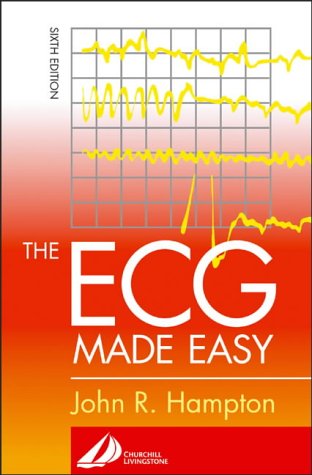
ECG made easy

Rabu, Juli 09, 2008

(0) Comments


P
ublisher: Churchill Livingstone

Number Of Pages: 312
Publication Date: 2003-03-25
ISBN-10 / ASIN: 0443072523
ISBN-13 / EAN: 9780443072529
Binding: Paperback

Book Description:
This highly respected book is a simple, readable guide to the accurate identification and interpretation of abnormal electrocardiogram (ECG) patterns for medical students, nurses and junior doctors. The emphasis throughout is on the straightforward practical application of the ECG. It will prove useful to all medical and health care staff who require clear, basic knowledge about the ECG.

you can get that's file in here

Rahma Azhari

Rabu, Juli 09, 2008

(0) Comments

Ini foto Rahma Azhari yang menurut saya keren seh,sexy tapi tetep keren...
mudah-mudahan tidak dianggap pornografi dan porno aksi yah..


gimana menurut pendapat kamu keren bukan,foto ini saya dapatkan dari forum bukan milik saya pribadi lho (takut diancam dengan undang-undang pornografi soalnya hehehe...)
ada disini
but i think this is a nice pic and no pornography

Critical Thinking & The Art of Close Reading (Part Three)

Rabu, Juli 09, 2008

(0) Comments

In the previous two columns we introduced the idea of close reading, emphasizing the importance of the following:
• understanding your purpose in reading

• understanding the author’s purpose in writing

• seeing ideas in a text as being interconnected

• looking for and understanding systems of meaning

• engaging a text while reading

• getting beyond impressionist reading

• formulating questions and seeking answers to those questions while reading


To read well , in addition to having the above understandings, students must be able to identify the big picture within a text, to determine the key ideas within the text early on, and to see the scaffolding that connects all the ideas within the text. In other words, they need to develop structural reading abilities. Moreover, students need to see that there are generalizable skills one must develop to read sentences and paragraphs well. In addition, students must develop reading skills specific to reading certain kinds of texts – like textbooks, newspaper articles and editorials.

In this column we will focus on the theory of close reading. We will discuss “structural reading” first. We will then make some basic points about the art of reading sentence and paragraphs. We will conclude with some domain specific theory: how to read a textbook, how to read a newspaper, and how to read an editorial. For examples of the theory we outline here, see The Thinkers Guide to How to Read a Paragraph: The Art of Close Reading. The following guideline is written directly to the student:

Structural Reading

Structural reading is a form of close reading applied to the overall structure of an extended text (usually a book). In it, we focus on what we can learn about the book from its title, preface, introduction, and table of contents. Structural reading has two main uses. First, it enables us to evaluate a book to determine whether we want to spend the time to read it carefully. Second, it provides an overview to use as scaffolding in reading the text. If we can get a basic idea of what a book is driving at before we read it in detail, we are much better able to make sense of the parts of it as we read them paragraph by paragraph. Knowledge of a whole helps us understand all of its parts. Knowledge of a part helps us better understand the whole (which contains the parts).

To read structurally, ask these questions:

* What does the title tell me about this book?

* What is the main idea in the book? (You should be able to figure this out from skimming the introduction, preface, and first chapter.)

* What are the parts of the whole, and how does the book deal with those parts? (Again, this may be found in an overview in the introduction, preface, first chapter, and/or table of contents.)

* In the light of my structural reading, what questions would I pursue during close reading?

How to Read a Sentence

Reading a sentence consists, first of all, in finding a way to state what the sentence says so we can think the thought the sentence expresses. Further ways to make the meaning of a sentence clear are: elaborating the sentence, finding an example, and illustrating its meaning.

Finding key sentences means finding the sentences that are the driving force within a book. Structural reading is one way by which we locate key paragraphs and boil them down to key sentences, and thence to key ideas and key questions.

An important part of reading with discipline is to connect sentences to the broader context within which they are located, to see how they fit within the written piece. For every sentence you read, you might ask:

* How does this sentence connect with the other sentences in the text?

* How does this sentence relate to the organizing idea of this text
as a whole?

Good readers read sentences in relationship to other sentences, connecting each sentence with the purpose of the written piece. Taking a sentence out of context can pose problems because sentences read in isolation from the sentences that precede or follow them often overstate a point. The sentences that precede or follow usually clarify the author’s true meaning, or bring it in line with supporting facts. Good readers read a text charitably and generously. They look for qualifications of points that otherwise might seem false or overstated.

How to Read a Paragraph

Carefully reading a paragraph involves finding the idea or question that is the driving force within the paragraph. Finding key paragraphs consists of finding the ideas or questions that are the driving force within the book. Structural reading, you will remember, is an important means by which we locate key paragraphs.

All paragraphs within a written piece should connect to every other paragraph so that we can see logical connections between ideas. All ideas should form a system of meanings. As you move from paragraph to paragraph, ask:

* What is the most important idea in this paragraph?

* How do the ideas in this paragraph relate to the ideas in
previous paragraphs?

* How are the important ideas in the text connected?

Look for paragraphs that focus on significant ideas or questions. Connect those ideas, when possible, to situations and experiences that are meaningful in your life. To actively connect ideas to life situations, ask:

* How can I relate this idea to something I already understand?

* Is there an important idea here that I can use in my thinking?

* Have I ever experienced a situation that sheds light on this idea?

How to Read a Textbook

The first and most important insight necessary for successfully reading a textbook is that all textbooks focus on “systems” which, when internalized, can help us reason through a specific set of problems. They focus on a special way of thinking about a special set of things. To elaborate, history textbooks teach a special way of thinking about events in the past. Biology textbooks teach a special way of thinking about living things. Mathematics textbooks teach a special way of thinking about the numbers, shapes, and figures. Physics textbooks teach a special way of thinking about mass and energy and their interrelations. The same is true for all other textbooks.

Thus, there is no way to learn mathematics from a math textbook without learning how to figure out correct answers to mathematical questions and problems. There is no way to learn history from a history textbook without learning how to figure out correct or reasonable answers to historical questions and problems. There is no way to learn biology from a biology textbook without learning how to figure out answers to biological questions and problems. Any subject can therefore be understood as a system of figuring out correct or reasonable answers to a certain set of questions. We study chemistry to understand chemicals and how they interact (to answer questions about chemicals). We study psychology to figure out human behavior (to answer questions about certain human problems). All subjects can be understood in this way. All textbooks can be read in this way.

Most textbooks begin with an introductory chapter or preface that introduces us to the field of study: What is biology? What is physics? What is history? It is important for us to do a close reading of this opening chapter in order to acquire from the very beginning an insight into the most basic and fundamental concepts in the field.

Once we have a basic idea of the whole of a subject from the introductory chapter, we should be able to do some thinking within the system. Thus, with a basic idea of biology, we should be able to do some simple biological thinking. We should be able to ask some basic biological questions and identify some relevant biological information. This is crucial to success in reading the remainder of the textbook because if we do not have a clear concept of the whole, we will not be able to relate the parts (covered by the other chapters) to that whole.

Our reading strategy should not be whole, part, part, part, part, part…but, rather, whole, part, whole, part, whole, part. We first ground ourselves in a basic (though introductory) idea of the whole. We then relate each part (each subsequent chapter) to that whole. We understand the whole through integrating the parts into it. We use the whole as our tool of synthesis. We use our knowledge of the parts as a tool of analysis.

How to Read a Newspaper for
National and International News

To become adept at reading the news, you first must understand that every society and culture has a unique worldview. This colors what they see and how they see it. News media in the cultures of the world reflect the worldview of the culture they write for. Suppose you have two persons reporting on the events of your life — your best friend and your worst enemy. Your best friend would highlight the positive things about you; your worst enemy would highlight the negative things about you. Both would think they were simply telling the truth.

If you understand this, you can apply that understanding to how the news is constructed by every country in the world. Within any country, the news media highlight what is positive about the country; its enemies’ news media highlight what is negative about it. As a critical reader of the news, you must make adjustments for both of these biases. So if you are a Frenchman in France reading French newspapers, you must read the fine print to find out the negative things about France that are being suppressed or buried. If you are reading a newspaper from a country that considers France its enemy, you must, in a parallel way, read to correct for its one-sidedness (its predictable negativity about France).

At present, the overwhelming majority of people in the world, untrained in critical reading, are at the mercy of the news media in their own country. To learn how to read the news critically, you can begin with our guide entitled How to Detect Media Bias & Propaganda. It focuses on how to:

* interpret events from the perspective of multiple views

* find multiple sources of thought and information, not simply those of the mass media

* identify the viewpoints embedded in news stories

* mentally re-write (reconstruct) news stories through awareness of how stories are told from multiple perspectives

* assess news stories for their clarity, accuracy, relevance, depth, breadth, and significance

* identify contradictions and inconsistencies in the news (often in the same story)

* identify the agenda and interests served by a story

* identify the facts covered and the facts ignored in a news story

* identify the points of view systematically presented in a favorable light and those presented in an unfavorable light

These are some of the skills that critical readers of the news develop. To take command of the way the mass media influence your thinking about the world, you must learn how to see through their biases and appreciate dissenting as well as mainstream points of view. Only then can you come to well-reasoned conclusions using a balanced approach. At present, few people have developed the skills to do this.

How to Read an Editorial

To become adept at reading editorials, you must first understand that the goal of the editorial writer is to make a brief case for one side of a controversial issue. His or her goal is not to consider all sides or to do what a writer of a research paper or report is expected to do. Most people read editorials in the following way. If writers are defending what they believe, they praise the editorial. If writers are criticizing what they believe, they criticize the editorial. Therefore, they are unable to gain insights from people with whom they disagree. The fact is that most people are rigid in their thinking and largely closed-minded. There are many points of view into which they cannot enter. There are many ways to look at the world that they never examine or appreciate.

By contrast, critical readers recognize that they have been wrong in the past and may be wrong now. They recognize what they would like to believe while at the same time realizing that they may be prejudiced by that very desire. It is in this spirit of open-mindedness that we should learn to read editorials — especially the ones to which we are least sympathetic. We must learn how to step outside of our own point of view and enter points of view with which we are unfamiliar.

Of course, we should not assume that the editorials in our own culture’s newspapers provide us with a full range of points of view. What we can expect is merely that these newspapers provide us with the range of views held by the mainstream readers within the society. The goal of a newspaper is not to educate readers concerning international and dissenting points of view but rather to make money. And a newspaper makes money only when it caters to the beliefs and preconceptions of its readers. Thus, newspapers rarely present radically dissenting perspectives, and when they do, they emphasize that these are merely opinions.

Critical readers read all editorials with equal sympathy. They read to discover and digest a wide range of points of view, especially points of view that tend to be ignored in the mainstream of the culture. To enhance their breadth of vision while avoiding ethnocentrism and sociocentrism, critical readers search out dissenting media sources. For examples of dissenting news sources, see The Miniature Guide to Media Bias and Propaganda.


This article was adapted from How to Read a Paragraph: The Art of Close Reading by Richard Paul and Linda Elder.


Faith No more

Kamis, November 29, 2007

(0) Comments

Album : All The Pain Money Can Buy
Song Title : Out Of My Head

Sometimes I feel
Like I am drunk behind the wheel
The wheel of prosperity
However it may roll
Give it a spin
See if you can somehow factor in
You know there's always more than one way
To say exactly what you mean to say
Chorus:
Was I out of my head? Was I out of my mind?
How could I have ever been so blind?
I was waiting for an indication
It was hard to find
Don't matter what I say only what I do
I never mean to do bad things to you
So quiet but I finally woke up
If you're sad then it's time you spoke up too
Chorus
Repeat Chorus

Aku...

, , ,